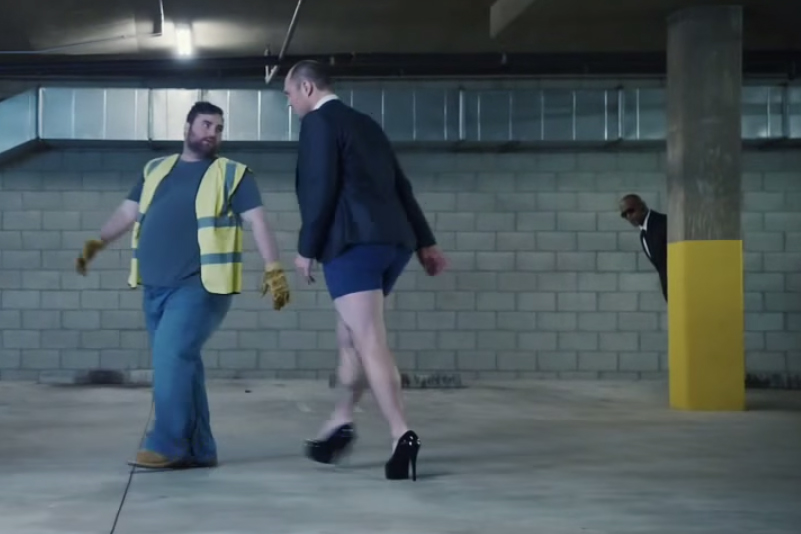
Think! Don't Drink and Drive Campaign 2008
TV advert - Tells the reality of the aftermath of drink driving, reaches the young - middle aged people in the audience (they're target audience) that have a future that was just described, and has the potential to be ruined in this way as well. So they relate and scare their audience, while going against the grain by not showing the incidence, using real life situations to show how real it is.
National Survey - Uses surveys to show the public the reality of people's knowledge, shocking people into learning to escape the ignorant majority. Also, surveys go out to a wider audience, ensuring that at least some people will see the message, which isn't always guaranteed in a TV advert. Also, receiving a survey denotes to the reader that they are part of the endangered demographic, which encourages them to listen and act on the information.
Posters - uses statistics to show the probability of a fatal or serious crash, and then solidifies the message with the consequences of drink driving. The setting, a pub, seems harmless and relatable as it's similar to many pubs throughout the country, connotes to the reader that it can happen to them.
Young - middle aged (18 - 50) was the target audience for this campaign, because they are the people most likely to over drink and drive. The lifestyle is most likely working - middle class, as they are the majority, and most likely to partake in pub culture. The interests targeted are aspiring professionals and sport, the latter often seen at pubs where drinking is common, and the former typical of the target audience age.
Think and be responsible while drinking was the key message for this campaign. The message of this advert differs from the typical drinking awareness advert, as it focuses less (but doesn't exclude) human death and injury, and instead brings to light the financial and career losses that could occur due to drunk driving. This is effective, as focuses on the future of the audience, who, as they are most likely young and career minded, are likely concerned about. Also, many young people are shown to feel 'invincible' at that age, so are less likely to take seriously the threat of death or injury. This message was consistent throughout the adverts, using alcohol itself to deliver the message, and the pub setting was also consistent to give the same feel.
The time the TV advert appeared on channels was just before and post watershed. At this time, many people are preparing to go out and drink, and so this advert will be fresh in the viewer's minds while drinking, which was effective in preventing drink driving - achieving their goals. The timing of this advert, at a time when a primarily adult viewership was watching, was also effective as it applied to the people who were still at home watching TV, who are also likely to go out drinking at some point.
The posters used in the campaign were distributed to pubs and other places where alcohol was distributed, so they were seen primarily by people who were in the position where they could drink drive, and as the poster would be fresh in their minds, they wouldn't do this.
As this campaign was conducted in 2008, social media wasn't used as it wasn't at the point where many people used it, so it would be ineffective at conveying their message.
TV, especially at the times at which the advert played, was an effective method as the majority of the target audience had access to a TV, and so the advert. This method reinforced the message effectively as it used a scenario that is common for the people watching, and may happen to the viewers frequently, making the message apply to the viewers more and so more likely to be heeded. The advert could also be shown at places where drinking would occur, i.e. pubs, due to the channels that it advertised on, further increasing it's effectiveness as it would be fresh in the audiences mind, of which it would reach a large amount. The timing connoted that the person watching could be the person in the advert, as the person in the advert bore similarities to the average drinker in the country, and was on at a time when people could see it and so relate to it.
These adverts have avoided scrutiny of the ASA and Ofcom. This is because they purposefully avoided including graphic and emotionally disturbing content in the form of showing representations or reenactments of car crashes, instead focusing on the after effects of it. If they were not more careful with the content, they could be forced to remove the advert from broadcast, or a fine if the content was graphic enough.
However, the detail the TV advert went into, as well as the appearance of the man in the advert and his mode of delivery, could be considered disturbing to younger audiences, so it was only shown at later times to avoid this. However, this comes down to more of an ethical issue, as questioning whether this is the most effective, and least offensive way to give across the message.
National Survey - Uses surveys to show the public the reality of people's knowledge, shocking people into learning to escape the ignorant majority. Also, surveys go out to a wider audience, ensuring that at least some people will see the message, which isn't always guaranteed in a TV advert. Also, receiving a survey denotes to the reader that they are part of the endangered demographic, which encourages them to listen and act on the information.
Posters - uses statistics to show the probability of a fatal or serious crash, and then solidifies the message with the consequences of drink driving. The setting, a pub, seems harmless and relatable as it's similar to many pubs throughout the country, connotes to the reader that it can happen to them.
Young - middle aged (18 - 50) was the target audience for this campaign, because they are the people most likely to over drink and drive. The lifestyle is most likely working - middle class, as they are the majority, and most likely to partake in pub culture. The interests targeted are aspiring professionals and sport, the latter often seen at pubs where drinking is common, and the former typical of the target audience age.
Think and be responsible while drinking was the key message for this campaign. The message of this advert differs from the typical drinking awareness advert, as it focuses less (but doesn't exclude) human death and injury, and instead brings to light the financial and career losses that could occur due to drunk driving. This is effective, as focuses on the future of the audience, who, as they are most likely young and career minded, are likely concerned about. Also, many young people are shown to feel 'invincible' at that age, so are less likely to take seriously the threat of death or injury. This message was consistent throughout the adverts, using alcohol itself to deliver the message, and the pub setting was also consistent to give the same feel.
The time the TV advert appeared on channels was just before and post watershed. At this time, many people are preparing to go out and drink, and so this advert will be fresh in the viewer's minds while drinking, which was effective in preventing drink driving - achieving their goals. The timing of this advert, at a time when a primarily adult viewership was watching, was also effective as it applied to the people who were still at home watching TV, who are also likely to go out drinking at some point.
The posters used in the campaign were distributed to pubs and other places where alcohol was distributed, so they were seen primarily by people who were in the position where they could drink drive, and as the poster would be fresh in their minds, they wouldn't do this.
As this campaign was conducted in 2008, social media wasn't used as it wasn't at the point where many people used it, so it would be ineffective at conveying their message.
TV, especially at the times at which the advert played, was an effective method as the majority of the target audience had access to a TV, and so the advert. This method reinforced the message effectively as it used a scenario that is common for the people watching, and may happen to the viewers frequently, making the message apply to the viewers more and so more likely to be heeded. The advert could also be shown at places where drinking would occur, i.e. pubs, due to the channels that it advertised on, further increasing it's effectiveness as it would be fresh in the audiences mind, of which it would reach a large amount. The timing connoted that the person watching could be the person in the advert, as the person in the advert bore similarities to the average drinker in the country, and was on at a time when people could see it and so relate to it.
These adverts have avoided scrutiny of the ASA and Ofcom. This is because they purposefully avoided including graphic and emotionally disturbing content in the form of showing representations or reenactments of car crashes, instead focusing on the after effects of it. If they were not more careful with the content, they could be forced to remove the advert from broadcast, or a fine if the content was graphic enough.
However, the detail the TV advert went into, as well as the appearance of the man in the advert and his mode of delivery, could be considered disturbing to younger audiences, so it was only shown at later times to avoid this. However, this comes down to more of an ethical issue, as questioning whether this is the most effective, and least offensive way to give across the message.
Coca-Cola Advertising and Rebranding Campaign 2015 - Share a Coke
Rebranding - The label of each type of Coca-Cola was changed to be more informative, as statistics showed that most people didn't know how each type was different. Ensuring that the reasons to buy each type was made clear resulted in higher sales, as people discovered the benefits of drinking it. This was so the younger audience (their target audience) could see that drinking Coke isn't as big a detriment to their health as they first thought, making it more attractive to the health and body image focussed younger generation.
Grouping products together (all adverts) - To make each 'type' of coke more synonymous with the overall brand, Coca-Cola decided to bring all the types together in a grouped advertisement, which supported the campaign's slogan 'Share a Coke', as it connoted that there was a drink for everybody within Coca-Cola. This all gave brith to the new slogan for Coke - 'Choose happiness', opposed to the older 'Open happiness', which denotes the different types of Coke, and connotes, again, that there is a type for everybody.
Tv adverts and this - The TV adverts released during this campaign also sported the new campaign and unifying strategy, which along with the masses of people in the advert connoted that everyone in this advert chose happiness, so it connotes that you can as well. These adverts intended to reach the younger audience (teens - mid thirties), as they are the people most likely to drink Coke. In addition to this, they are the most likely age to be concerned with body image and health, so showing them that Coke sports healthier alternatives leaves them thinking that Coke isn't as unhealthy as it seemed.
Sponsorship - The Rugby World Cup was sponsored by this campaign, and also used all brands in this campaign. However, the Coke Zero drink was made the focus of this campaign, differing from the campaign slightly as it didn't feature all drinks equally. However, the new slogan was still used.
Out-of-home advertising - I.e. billboards, were used heavily in this campaign to encourage people to buy Coke while out of the house, as it gives them the want for it in a place where getting it is possible.
The target audience for this campaign was teens - young adults, as they are the people most likely to drink Coke, and also as they are more likely to be focussed on health, more likely to reject Coke. So this campaign, unifying the types, gave these people the possibility of drinking a healthier alternative, making people of that persuasion more likely to drink Coke. Also, the people in the adverts were from both genders, and so advertised to both equally, using the ideal self and ideal partner ideology to connote to the audience that the people in the advert could fill these rolls, attracting both genders.
The key message for the campaign was :There's a Coke for everyone. This was denoted by the inclusion of all types of Coke in their adverts, and denoted by the 'Choose happiness' slogan, showing that there's a possibility to choose the best Coke for you, so there's one for everyone. The message for this campaign differs to previous Coca-Cola campaigns as it features the use of all the types of Coke, not just one, which was the norm before this. Also, the slogan changed to support this, from the 'Open happiness' which is effective with single a Coke type in an advert, to the 'Choose happiness' slogan which is effective with multiple types, as it shows choice.
The adverts appearing on the streets was effective as it gave people the idea of drinking a Coke drink, while they were in a place where Coke could be bought, i.e. outside shops and in shopping centres, which was effective in getting people to buy their drinks.
The sponsorship of the Rugby World Cup 2015 was effective, as the typical place where people gather to watch Rugby games, pubs and sports bars, usually sell Coke products, which is effective in encouraging people to buy the drinks. Appearing before the match, in breaks, and after the match, when people have time to buy drinks instead of watching the game, was also effective as it promoted them to buy coke at this time when people are more likely to buy drinks.
Using 'printed media' in the form of billboards and other OOH advertising was effective, as it encouraged people to buy the drink, or rather 'choose' the drink of their choice.
In addition, TV and physical media sponsorship of the Rugby World Cup 2015 was effective as the people likely to watch the WC on TV or live are most likely the target audience, making the advertisement even more effective as it appealed greatly to the people exposed to it. And as it would be fresh in the mind of the audience when they have the opportunity to buy coke, they are more likely to buy it, making it effective.
The advertisements included in this campaign didn't feature any disturbing or offensive material, staying away from 'adult' themes entirely, which means they avoided trouble with the ASA and other bodies.
This advertising campaign was also ethical, as it didn't feature any material that would cause distress or call morals into question.
The campaign used secret advertising to advertise the app to women in Turkey, where domestic abuse is common place. However, Vodafone assumed that men would stop women from getting the app, especially if they were in an abusive relationship, so they decided to hide the advert in places where only women would see the advert. In addition, they disguised the app as a torch app, and later changed it to a mirror app when they thought that many men had found out about it. This was effective in hiding the app, even if the abusive male knew the app existed, helping the women escape such relationships more easily and safely.Tv adverts and this - The TV adverts released during this campaign also sported the new campaign and unifying strategy, which along with the masses of people in the advert connoted that everyone in this advert chose happiness, so it connotes that you can as well. These adverts intended to reach the younger audience (teens - mid thirties), as they are the people most likely to drink Coke. In addition to this, they are the most likely age to be concerned with body image and health, so showing them that Coke sports healthier alternatives leaves them thinking that Coke isn't as unhealthy as it seemed.
Sponsorship - The Rugby World Cup was sponsored by this campaign, and also used all brands in this campaign. However, the Coke Zero drink was made the focus of this campaign, differing from the campaign slightly as it didn't feature all drinks equally. However, the new slogan was still used.
Out-of-home advertising - I.e. billboards, were used heavily in this campaign to encourage people to buy Coke while out of the house, as it gives them the want for it in a place where getting it is possible.
The target audience for this campaign was teens - young adults, as they are the people most likely to drink Coke, and also as they are more likely to be focussed on health, more likely to reject Coke. So this campaign, unifying the types, gave these people the possibility of drinking a healthier alternative, making people of that persuasion more likely to drink Coke. Also, the people in the adverts were from both genders, and so advertised to both equally, using the ideal self and ideal partner ideology to connote to the audience that the people in the advert could fill these rolls, attracting both genders.
The key message for the campaign was :There's a Coke for everyone. This was denoted by the inclusion of all types of Coke in their adverts, and denoted by the 'Choose happiness' slogan, showing that there's a possibility to choose the best Coke for you, so there's one for everyone. The message for this campaign differs to previous Coca-Cola campaigns as it features the use of all the types of Coke, not just one, which was the norm before this. Also, the slogan changed to support this, from the 'Open happiness' which is effective with single a Coke type in an advert, to the 'Choose happiness' slogan which is effective with multiple types, as it shows choice.
The adverts appearing on the streets was effective as it gave people the idea of drinking a Coke drink, while they were in a place where Coke could be bought, i.e. outside shops and in shopping centres, which was effective in getting people to buy their drinks.
The sponsorship of the Rugby World Cup 2015 was effective, as the typical place where people gather to watch Rugby games, pubs and sports bars, usually sell Coke products, which is effective in encouraging people to buy the drinks. Appearing before the match, in breaks, and after the match, when people have time to buy drinks instead of watching the game, was also effective as it promoted them to buy coke at this time when people are more likely to buy drinks.
Using 'printed media' in the form of billboards and other OOH advertising was effective, as it encouraged people to buy the drink, or rather 'choose' the drink of their choice.
In addition, TV and physical media sponsorship of the Rugby World Cup 2015 was effective as the people likely to watch the WC on TV or live are most likely the target audience, making the advertisement even more effective as it appealed greatly to the people exposed to it. And as it would be fresh in the mind of the audience when they have the opportunity to buy coke, they are more likely to buy it, making it effective.
The advertisements included in this campaign didn't feature any disturbing or offensive material, staying away from 'adult' themes entirely, which means they avoided trouble with the ASA and other bodies.
This advertising campaign was also ethical, as it didn't feature any material that would cause distress or call morals into question.
Vodafone Anti-Abuse app 2015
To do this, they hid the message in:
Labels in women's underwear - Messages were placed in the labels to assorted brands of women's underwear, to tell women to download the app. This was intended to appear in a place where only women would be likely to see it, and also allowed people who had seen the advertisement in the clothes, previous shoppers and shop workers who were most likely women, to spread the message and so reach a wider audience, all the while doing it covertly.
In make up and beauty blogs - Turkish beauty Youtube creator Adriane Braje were used by Vodafone to advertise the app in their videos, which was effective in that it reaches a much larger audience than the underwear technique, while still almost solely appearing to women. Also, seeing this advertisement in these videos could remind the viewer of the app if they don't download it, making it an ever present opportunity for them to download it, making it more effective. The media aspect of this advertisement allowed it to be shared covertly on social media through the various sharing methods on various platforms, effectively reaching a bigger range of audience, in addition to accessing women most likely to download the app, women who are competent and frequently use social media.
Social media - A series of links and advertisements for beauty products lead women to them posting a paragraph on Facebook in order to win a prize. However, posting this message activated an automatic response from a fake account appearing to be a typical Turkish woman. The message sent by this account advertised the app, and stated facts to encourage the download. This was effective in that not only did it say why the woman should download the app, but informed them on the problem as well, which acted as a reassurance to the woman that she is not alone in this problem, and that this app could solve it. This also connoted to the woman that the problem was shared among people similar to her, and people in similar positions had solved this problem.
Women 18+ were targeted for this campaign, as they are the demographic most likely to be victim of abusive relationships. Although, the younger part of this group, 18-35 are the most likely to use social media regularly, which is where a large part of the campaign took place and was shown. So the campaign targeted this demographic more, but this allowed this group to show other women in different groups the app, so it effectively targeted all women in Turkey.
This advertising campaign used the message of stopping abuse, and did this by giving women the message that the problem is shared, by people sharing the videos and message through social media, and by giving statistics to show women the scale of the problem. In conclusion, the message is that they (the women) can solve the issue they face domestic violence, by using the app.
The advertisements appeared in places where only women would see them, clothes almost only bought by women, videos only watched and shared by women etc., effectively targeting their audience while excluding any others from seeing them, thereby ensuring the app's success.
Choosing to use social media and Youtube videos to spread the message of the campaign was effective in a number of ways. Firstly, allowing the message to be be accessed by a massive audience on the internet, primarily through Youtube videos, allowed the message to be spread easily and on a large scale. Building on this, a major way the videos were shared was through people showing each other it. The personal touch and reassurance this gave made the message very effective, as people the audience trusted ensure them it was a good thing to download.
Physical media in the form of messages on labels was effective in that the advertisement only reached a very specialised audience, those who buy women's underwear, who would most likely to be women, while again preventing any other undesired audiences from seeing it.
Few governing bodies were able to cover this advertising campaign, as it relied almost entirely on the audience as it's advertising. However, avoiding details, which could be graphic, of abuse meant any advertisements were appropriate for all audiences.
In terms of ethics, this advertising campaign was fully ethically, not exploiting women or the message they were putting across in their advertisements.
IKEA #WonderfulEveryday
TV advert, and advert - The multiple TV adverts featured in this campaign were aimed to highlight the message of the campaign - that everyday acts and memories are valuable, even more than material things. Also, using everyday scenarios with everyday people featured in the advert (not ideal self or partner) makes the adverts relatable, as members of the audience from a variety of backgrounds and ages can relate to the advert, and so are more likely to pay attention to the advert, making it effective.Photograph competition - The competition - which entailed people taking pictures of wonderful things in their everyday life, was effective advertising as people could participate in the campaign, and so feel closer to it and the company, making them more likely to shop there. In addition, promoting the message of their campaign through audience competition makes it more relatable again, as real people can be seen taking up the message of the advert, making it effective.
Social media - The same adverts that appeared on TV were also circulated on social mediums such as Facebook and Twitter. This served to appear to a younger and wider audience, which are more likely to use social media. As this demographic are soon to be buying furniture for themselves, or who have parents who already do, this advert targeted them effectively by denoting to them that they would ned IKEA in the future.
18+ was the target audience for this campaign, which was shown by the inclusion of adults of all ages in both TV adverts, and in the photo competition. As adults from all ages are likely to need furniture at some point, this advert was designed to connote to all adults that they need the products available, which it did effectively as they could relate to the people in the advert.
Also, the photograph competition was won by a family, connoting that the products advertised apply to families, making them, and the people that have them, the target audience as well.
'Wonderful everyday' was the message, and name of this campaign. It aimed to show the audience that everyday things can be wonderful, and with the assistance of household things like a bookshelf, which would've come from IKEA, it can be possible. The message was also that these moments are the most valuable thing you can have, which was connoted by the photo album showing valued memories, which was in the TV advert.
The TV adverts appeared at times before the watershed, where families, who are most likely to use the service, are most likely to view them, making it effective in targeting it's audience. And showing the adverts on social media allowed the younger generation to see it, who are less likely to watch TV at earlier times but are likely to be on social media such as Facebook and Twitter.
Using TV adverts to reach a wide audience was effective, as a large demographic - adults as a whole, were targeted for this campaign. In addition, airing this advert at times when families would be able to view it, pre-watershed, was also a good choice as families are a part of the demographic who would most need the furniture available, and the adverts connoted to the parents and the children who viewed it that the family would be better and happier with IKEA.
In addition to this, social media was also a effective method of reaching the younger, 18 - 30 year old audience who are less likely to see the advert at the times it airs on TV, but are likely to see it on social media such as Facebook, so they effectively reached both of their primary audiences easily, especially as young adults are also likely to need furniture in the future, which the advert both denoted and connoted to them.
The ASA and Ofcom would've had to approve this advert to air, but the lack of disturbing or offensive content in the advertising campaign means it would be very unlikely to be penalised for any offence. However, the evident sadness felt by the grandmother over her loss in the first advert could be emotionally taxing for some viewers, especially those who have recently suffered a similar loss, so that would need to be taken into consideration - possibly by not making the loss too depressing for viewers. This also applies the depressing themes featured in the second TV advert.